


















 May 15, 2024
The Dead Sea Scrolls, discovered in the Qumran Caves near the Dead Sea between 1947 and 1956, represent one of the most significant archaeological finds of the 20th century.
These texts offer invaluable insights into Jewish life, religion, and thought during the Second Temple Period (530 BCE–70 CE).
This summary provides an overview of some of the key texts and their implications for our understanding of ancient Judaism and early Christian thought.
Find Text Here: https://davidforday.com/wp-content/uploads/2024/05/d_Dead-Sea-Scrolls-Texts-and-Translations-EN.pdf
Pentateuchal Stories and Commentaries
Reworked Pentateuch (4Q158)
The Reworked Pentateuch includes modified versions of stories from Genesis, Exodus, and Deuteronomy. This text features both biblical and extrabiblical content, offering unique interpretations and additions.
For instance, it presents a variation of the encounter between Jacob and the angel, and expands on the covenant between God and the patriarchs, highlighting the evolving nature of biblical narratives and their interpretations.
Genesis Apocryphon
The Genesis Apocryphon, also known as “Tales of the Patriarchs,” provides expanded narratives about biblical figures such as Noah, Abraham, and Lot.
It includes details absent in the canonical texts, such as the exact duration of Sarah’s stay with Pharaoh and her maintained purity through divine intervention.
This text illustrates the blending of biblical and non-biblical traditions to create a more comprehensive religious narrative.
Legal and Ritual Texts
Ritual Purity Laws (4Q274)
These fragments outline laws related to ritual purity, reflecting the community’s emphasis on maintaining religious and moral cleanliness.
These laws provide insight into the daily religious practices and beliefs of the Qumran community, emphasizing their strict adherence to purity.
Songs for the Sabbath Sacrifice (4Q403)
A collection of hymns meant for Sabbath worship, these texts reveal the liturgical practices and spiritual life of the Qumran community. They offer a glimpse into the communal worship and the importance placed on the Sabbath as a day of sacred observance.
Prophetic and Apocalyptic Writings
Hosea Commentary (4Q166)
This text provides commentary on the Book of Hosea, offering interpretations and expansions on the biblical text. Such commentaries highlight the community’s engagement with prophetic literature and their attempts to understand and apply these ancient prophecies to their own context.
The Book of Secrets (1QMyst)
An apocalyptic text, The Book of Secrets explores themes of redemption and resurrection, reflecting the eschatological beliefs of the Qumran community. It underscores their expectations of divine intervention and the ultimate triumph of good over evil.
Wisdom Literature
Wisdom Text (4Q410)
Containing proverbs and wisdom sayings, this text emphasizes ethical conduct and the pursuit of knowledge. It showcases the community’s appreciation for wisdom literature and its role in guiding moral and ethical behavior.
The Wiles of the Wicked Woman (4Q184)
A cautionary text warning against the dangers posed by a seductive and morally corrupt woman, this text reflects the community’s moral teachings and their views on the role of women and sexuality in maintaining communal purity.
Sectarian Literature
Community Rule (4QSd)
Also known as the Manual of Discipline, this text outlines the rules and regulations governing the community. It highlights the strict communal lifestyle and the emphasis on piety, obedience, and communal harmony.
The War Rule (4Q285)
Describing the eschatological battle between the forces of light and darkness, this text reflects the community’s militant and apocalyptic outlook. It provides insight into their belief in a cosmic struggle and the ultimate victory of divine forces.
Miscellaneous Texts
The Copper Scroll (3Q15)
Unique among the Dead Sea Scrolls, the Copper Scroll lists hidden treasures, adding an element of mystery and adventure. It has fascinated scholars and treasure hunters alike, offering a tantalizing glimpse into the material culture and economic aspects of the community.
Physiognomic Horoscopes (4Q186)
Detailing astrological and physiognomic predictions, these fragments offer insights into the community’s beliefs in divination and destiny. They reflect the integration of astrological knowledge into their religious worldview.
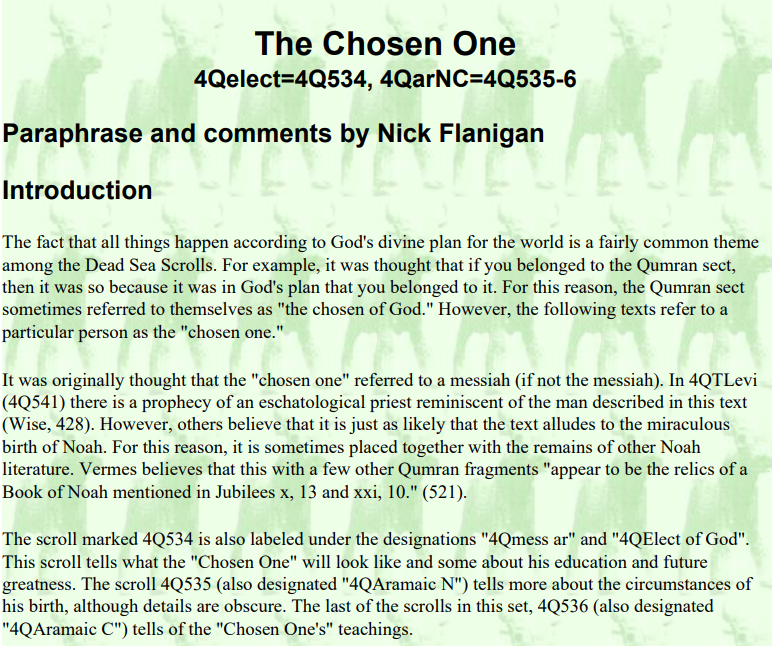
The Birth of the Chosen One
One of the most intriguing aspects of the Dead Sea Scrolls is the references to a messianic figure, often referred to as the “Chosen One.” Texts such as 4Q534 and 4Q536 describe this figure, who is expected to bring about the redemption and restoration of Israel.
These messianic expectations are central to the eschatological hopes of the Qumran community and illustrate their belief in a divinely appointed leader who will fulfill God’s promises.
Significance and Impact
The Dead Sea Scrolls have profoundly impacted biblical scholarship, providing a deeper understanding of the diversity of Jewish thought and practice during the Second Temple Period.
They reveal variations in biblical texts and interpretations, showcasing the dynamic nature of Jewish scripture and tradition.
The scrolls also offer valuable context for the development of early Christian thought, as many of the themes and ideas present in the scrolls resonate with those found in the New Testament.
Conclusion
The Dead Sea Scrolls are a treasure trove of ancient wisdom and religious thought. From legal codes to apocalyptic visions, these texts offer a comprehensive view of the spiritual and cultural life of a Jewish sect living in the Judean Desert over two millennia ago.
Their discovery continues to illuminate the historical and religious landscape of the ancient Near East, enriching our understanding of the roots of Judaism and Christianity.











 Prev Post
What do you think?
Show comments / Leave a comment